


Degreasing a screen (new or reclaimed)
In short: degreasing removes the oils, dust and residues that stop the emulsion from adhering evenly to the mesh. A poorly degreased screen gives an uneven coating and pinholes (fisheyes) in the emulsion.
Good degreasers contain wetting agents (adhesion promoters) that improve how the emulsion holds onto the mesh, and therefore the development. So you degrease systematically before every coating.
The steps
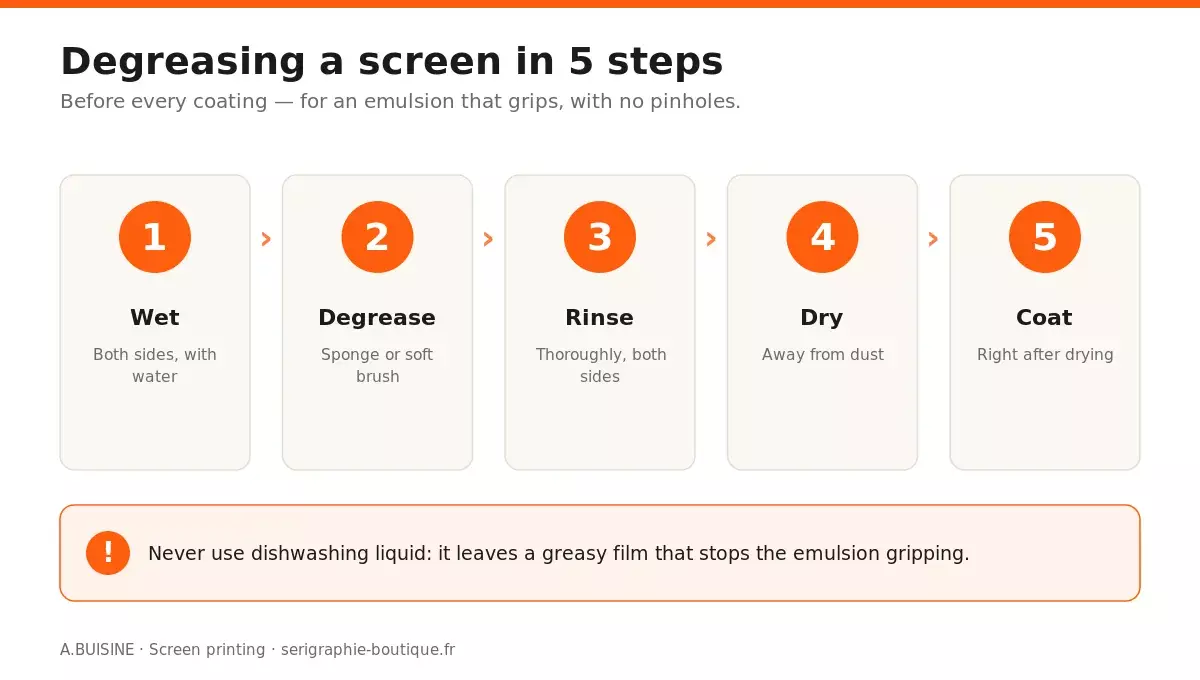
1. Wet the mesh
On both sides, with water.
2. Apply the degreaser
A screen printing degreaser, with a sponge or a soft brush, on both sides.
3. Rinse thoroughly
With water, on both sides, to remove any degreaser residue.
4. Let dry away from dust
Print side down, for better water run-off.
5. Coat immediately after drying
To avoid any fresh contamination of the mesh.
Frequently asked questions
Can I use dishwashing liquid?
No: household detergents leave a greasy film and additives that harm emulsion adhesion, without improving adhesion to the mesh at all. Use a degreaser made for screen printing.
Do I need to degrease a new screen?
Yes: a new mesh carries residues from manufacturing and handling.